

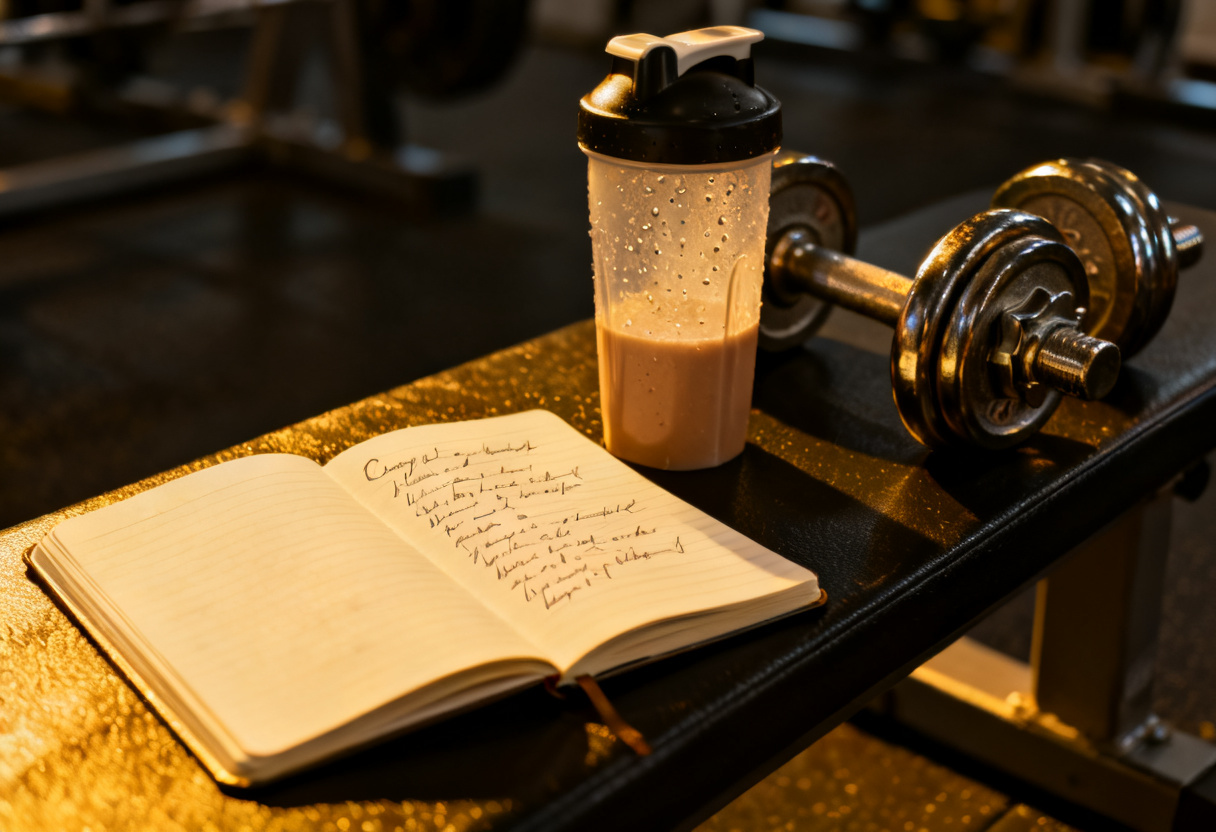
The Marcos Of Journaling, Or Why Science Says It Is Good For You
There are some things I would never do, nor attempt, if science wasn’t very clear on the outcome. With the assumption that this is true for others and I’m not just a weirdo, I want to share some of the science behind journaling.
Buckle up, this is quite an interesting one.
The man and his paradigm
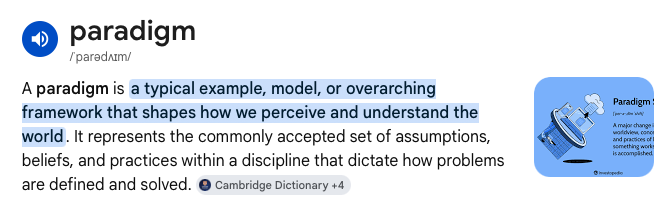
The guy’s name is James Pennebaker, and in 1986 he noticed that people who have gone through something traumatic and kept to themselves tend to get physically sick. If this sentence doesn’t trigger the autoimmune community, I don’t know what will…
Since science wasn’t as advanced then as it is today, he didn’t think of checking whether their DNA was broken. Instead he decided to try a less invasive way.
He sat a group of students down and asked them to write. Fifteen minutes a day, four days in a row, about the most traumatic experience of their lives. No grammar rules, no structure, no audience. Just their rawest thoughts, on the page.
And then he waited and counted how often they’ll visit the health centre over the following 6 months.
I suppose you won’t be too surprised to find out that people who had written about their trauma went to the doctor significantly less. What’s more, when tested, their immune function had measurably improved.
Our mate James then became obsessed. So obsessed that he ended up repeating the experiment over and over again for the next 30 years. Lots of his peers in the scientific community tried it, too and the results were the same, time and time again.
Before we start handing pens to infants at birth though, we have to acknowledge that whilst it did work remarkably enough to make headlines (and continues to do so), it didn’t work every time for every person. Nevertheless, no side effects were noted either.
But what actually happens in your brain?
This is perhaps my favourite part!
Several years ago a book titled “The Chimp Paradox” literally exploded as an international bestseller in an attempt to explain why sometimes we’re incredibly stupid. If you haven’t read it, I urge you to do so. If you have, or have studied the human brain, then you know what the amygdala is.
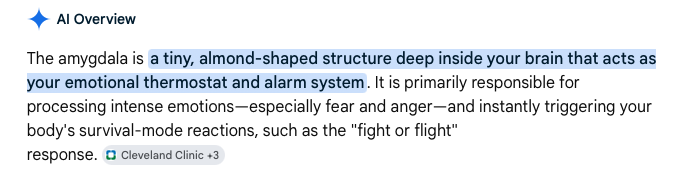
In 2007 with more advanced technology available, a team at UCLA (The University of California, Los Angeles), put people inside brain scanners and showed them scary images, designed to get their brains to react and without fail, all of them did. So far, so good – their brains were working as expected – everyone’s amygdala lit up like a Christmas tree.
Then, still inside the brain scans, they asked people to name the emotion they’re experiencing. Nothing fancy, no medication was dispensed, nothing had changed. Suddenly, the brain’s alarm system went quiet and another part of the brain, the prefrontal cortex (a.k.a. your brain’s CEO tasked with making decisions) tuned in.
People were no longer in fear; simply calling the emotion what it is had helped them transition from panicked to rational.
Journaling does the same thing, but for emotions you’ve buried deep inside and carry around with you for ages. It’s an incredibly potent release that can quite literally revert the damage adulthood has done to your nervous system. But yes, it takes time.
Journaling is Truly a Healing Practice
This next one really got me, because the experiment worked with actual patients with diagnosed illnesses (including cancer). Not people who have gone through trauma but are coping; these were patients whose symptoms had become severe enough to require medical care with some experiencing very reasonable and justified anxiety.
It was conducted in 2018 at Penn State with seventy adults who had actual physical and mental conditions. The group of 70 was randomly split and some people got the regular care they would have gotten anyway. 35 of them, however, were assigned to a group that was asked to journal for 15 minutes a day, only 3 days a week.
It’s important to mention that whilst our friend’s James’ people focused on describing the trauma, these people were asked to take a more positive approach and explore the things in their lives worth appreciating. It wasn’t exactly gratitude journaling, but quite similar. And it didn’t even deliver the joy of simply putting pen to paper – it was web based.
Want to know the outcome for those who journaled? Of course you do. Here it is:
- One Month later: Reduced mental distress and lower anxiety.
- Two months later: Greater Resilience.
This is not because journaling is magic, but because writing about what you’re experiencing gives your nervous system somewhere to put it.
The honest part
I urge you to actually take the time to read the studies, but even if you won’t, here’s what you need to remember. Journaling doesn’t solve all of your problems. It doesn’t work for everyone, nor does it work every time.
Even if you adore journaling you know that there are moments in life when you need to take a step back.
Pennebaker himself is clear that writing can feel worse before it feels better — that sitting with difficult things on the page is not always comfortable, and the process can temporarily increase distress before it reduces it.
But however you feel about the idea of journaling, please remember the following.
No side effects. No foreign substance your body will try to reject. No cost. And the very real possibility that you’ll discover you’re more creative than you thought.
If you’d rather not do it alone, join the next Daily Pages challenge — 30 days of writing with like-minded people. It’s free.
Join here: https://DailyPages.Life/Challenge
Full citations for your reading:
1. Pennebaker & Beall (1986) — the original expressive writing study Pennebaker, J.W. & Beall, S.K. (1986). Confronting a traumatic event: Toward an understanding of inhibition and disease. Journal of Abnormal Psychology, 95(3), 274–281.
2. Pennebaker (1997) — thirty-year summary paper https://journals.sagepub.com/doi/10.1177/1745691617707315
3. Lieberman et al. (2007) — brain imaging / affect labelling https://pubmed.ncbi.nlm.nih.gov/17576282/ Full text (free): https://sanlab.psych.ucla.edu/wp-content/uploads/sites/31/2015/05/Lieberman_AL-2007.pdf
4. Sohal et al. (2022) — systematic review and meta-analysis https://pmc.ncbi.nlm.nih.gov/articles/PMC8935176/
5. Smyth et al. (2018) — randomised controlled trial, anxiety https://pmc.ncbi.nlm.nih.gov/articles/PMC6305886/