


I Know Why Life Sucks. I Also Know the First Step Towards Fixing It.
There’s a visual that lives rent-free in my head. It’s that scene of a young lad who walks into a cobbler’s shop and starts by sweeping the floors.
It’s all the cobbler lets him do the first few months. A few months later our lad, let’s call him Jack, gets to hold the leather, then to cut it. A year passes by and Jack makes his first shoe sole.
A few more years and he knows the craft inside out. He knows where the leather comes from, how the stitching holds under pressure, which customer needs a wider toe box and why. He also knows how long a good pair of boots should last and exactly how to make it. He was there for all the client visits, the supplier deliveries, and everything in between.
Jack wasn’t just doing a job. He was absorbing a craft that he’d make his own. A craft that would shape his life and give him the opportunity to raise a family. Oh, yeah, back then raising a family and supporting it throughout your entire life was also a key value.
That world is gone.
And I’m here claiming that this is exactly why many of us feel like there’s something fundamentally wrong with the system we exist in.
The craft we lost and how it broke us
For most of human history, work had a visible arc. You started at the bottom, but the bottom was connected to the top, and you could see the whole thing from where you stood. An apprentice baker knew that one day they’d run the bakery. An apprentice carpenter could see every stage of the chair being made, from raw wood to finished piece.
Work had a beginning, a middle, and an end — and you were present for all of it.
BUT MOST IMPORTANTLY….
You could see the impact of everything you do. You knew the people who benefited from your labour. They knew you. You all participated in a community in which effort made a difference.
My grandmother, for example, collected electricity meter readings by visiting each and every home in her allocated region. On the surface, this sounds like exactly the kind of dull, repetitive corporate task that can kill your soul.
But it wasn’t. Because my grandmother knew Maria’s grandson and his school troubles. She knew Peter’s issues with his elderly mother. She knew George’s restaurant, its successes and failures, and she knew what a spike in electricity costs would mean for his ability to keep the lights on. When that spike came, she protested alongside her community — because she was part of it. Her work touched real people and she got to see how.
Her job made a difference. She made a difference. And she knew it.
What replaced the world in which WE mattered?
The old system had its errors; all systems do. But what has replaced it destroys our chances for a basic human need: social ability, a.k.a., creating something that ties you to your community.
The modern corporate role is deliberately narrow. You do your part of the process — your column in the spreadsheet, your section of the campaign, your slice of the project — and you hand it on. You rarely see the beginning and almost never get to see the end. You have no idea if what you do makes a single bit of a difference to anybody.
You end up spending your days being an invisible cog to (quite often) a completely meaningless system.
Today’s job framework is rooted in alienation. And it’s by design.
The modern corporation needs you specialised and interchangeable. It needs you to do your part efficiently and not ask too many questions about the whole. This is good for productivity. It is catastrophic for meaning.
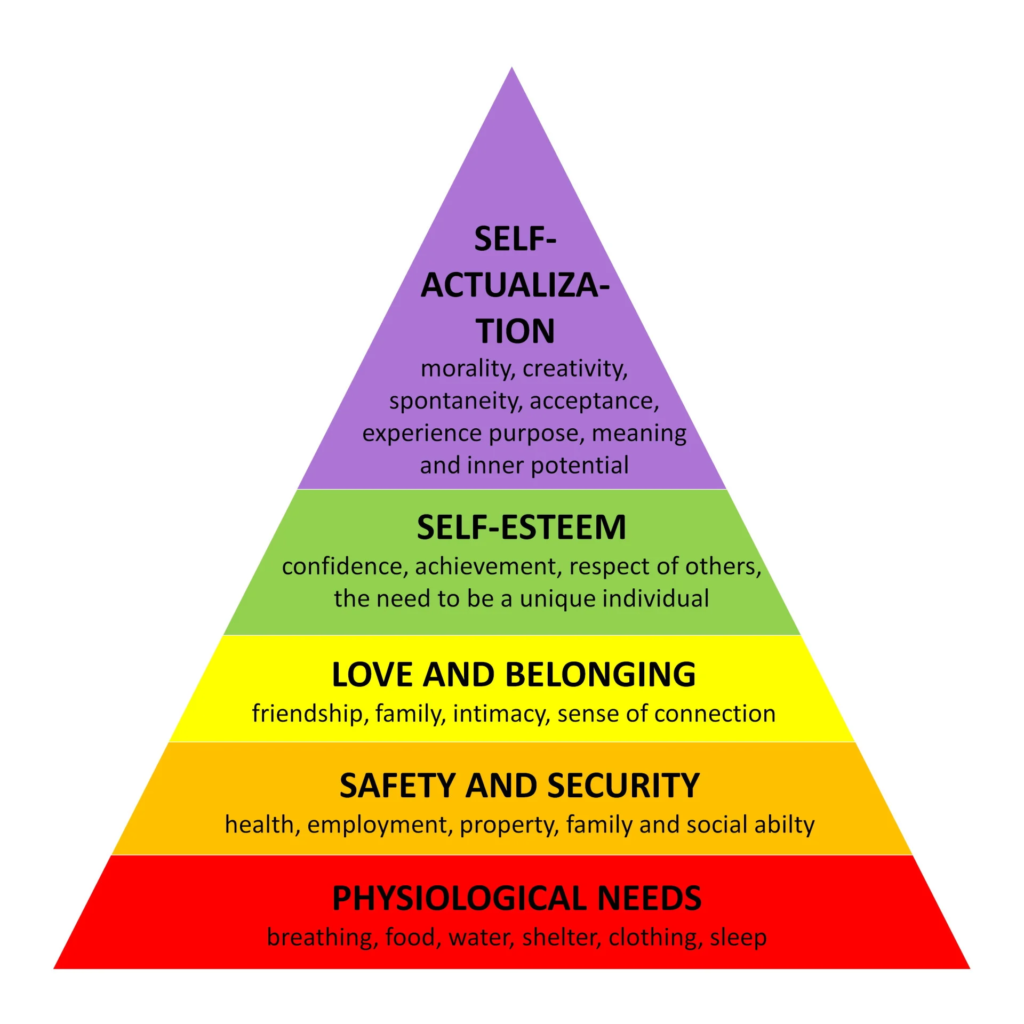
And here’s the thing about meaning: it isn’t optional, nor a nice-to-have. It’s a fundamental human requirement, practically as important to us as health.
The Monday dread, the Sunday evening heaviness, the grinding sense that you’re spending your most alert and capable hours on something that doesn’t matter — this is what meaning deprivation feels like at scale. And it’s an epidemic.
The people who have escaped the corporate BS bucket
There are two kinds of people who don’t experience this.
Those, who are out of the system
These are the people who have found something that is genuinely theirs and were lucky enough to have all the ingredients allowing them to pursue it. That might be a business, a craft, something creative. Surely, it’s not all sunshine and rainbows. There are hard days and there are troubles. The stakes are often very high. But at least they know that everything they do matters.
Those, who can switch off
These people are a mystery to me, but I know that they exist. They’re able to go to work and do what needs doing without a single ounce of care in the world. It brings them no satisfaction, but it also brings them no worry. Their personality lives outside of working hours, and when they clock out at 5pm sharp – unapologetically – they get to be the person they are. This is not failure; it is a very sane response to an insane structure.
Who suffers the most?
It’s those amongst us who try to instil meaning and perfection in everything we do. Those who care about actually going a good job. Those whose emotions are tied to their physical presence and who are unable to switch personalities as if we can walk out of one body and into another.
We’re not broken either. We just are the way we are and trying to switch off whilst at work can be absolutely detrimental to our ability to live life. Because being a person who switches off, in our case, requires so much effort that we end up a shell of a human by the end of the day and have no power for anything else.
But what we all need to understand is that we’re trying to find fulfilment in a system that was never designed to let us matter.
It isn’t working because it was never going to work. The craftsman’s apprentice learned everything and eventually owned the shop. The corporate employee learns their function and gets replaced when a cheaper function is available.
We are not the problem. The structure is.
What can we actually do about it?
I want to be honest with you here, because easy answers don’t help anyone.
The solution isn’t simply “start a business” or “quit your job” or “find your passion.” Modern life has entangled us carefully – the bills, the mortgage, the responsibilities that don’t pause while you figure out what your life is supposed to be about. The corporate structure has designed itself to be very difficult to leave. This is not an accident.
The life outside of work constantly demanding your attention and every other resource you’ve got is also by design. A design that never allows you to think critically. A design, that will have popping pills in a desperate attempt to create a reality that might be slightly more palatable.
But there is a first step. And it’s not even a dramatic one.
It all starts with shutting the noise down and having an honest conversation with yourself. Go back to the depths of your soul and find out what you actually care about (list the things), what you’re willing to sacrifice and what needs protection at all costs. What battles you’re ready to fight and which ones you’d rather lose.
Remember this:
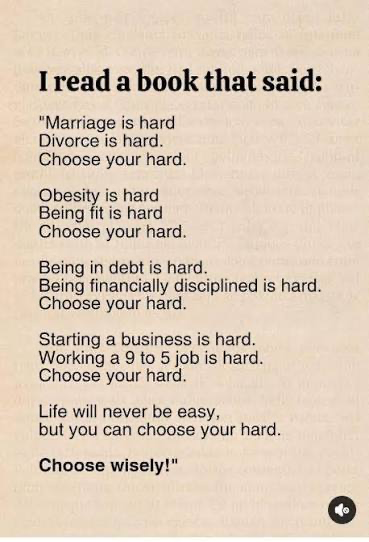
Journaling can help you choose your hard when it’s done honestly. Not gratitude lists and morning affirmations. Actual, unfiltered, sometimes uncomfortable conversation with yourself about what is and isn’t working, what you want and what you’ve been settling for, what you’d build if you weren’t afraid of what building it might cost you.
You can’t build a different future from a foggy internal baseline. You need to know what you actually think — not what you’re supposed to think, not what would be practical or sensible or well-received — but what you actually think.
That’s the first step. It doesn’t solve anything but helps you name the things that need solving making them visible. That’s something you can work with.
If you want to start — come and write with us. The Daily Pages challenge is thirty days of honest writing, in the company of people doing exactly the same thing. Free places are open to everyone. Join here →